
MADE IN … REALITY
MADE IN … REALITY
MADE IN … REALITY
In lingerie, origin is rarely a single place. “Made in” refers to one legal moment, while craft lives across design, materials, assembly, and finishing. In this article, L’IA explains how to read the label with nuance—and then trust what the body confirms: construction.
In lingerie, origin is rarely a single place. “Made in” refers to one legal moment, while craft lives across design, materials, assembly, and finishing. In this article, L’IA explains how to read the label with nuance—and then trust what the body confirms: construction.
Once designed to disappear under clothing, lingerie now steps into daylight as a deliberate line in the look. L’IA traces how corsetry’s discipline and silk’s quiet authority translate intimacy into composed visibility, where craft and restraint shape what is seen—and what remains yours.
PUBLISHED: FEB 2, 2026
PUBLISHED: FEB 2, 2026
Once designed to disappear under clothing, lingerie now steps into daylight as a deliberate line in the look. L’IA traces how corsetry’s discipline and silk’s quiet authority translate intimacy into composed visibility, where craft and restraint shape what is seen—and what remains yours.
4 MIN READ
4 MIN READ
Once designed to disappear under clothing, lingerie now steps into daylight as a deliberate line in the look. L’IA traces how corsetry’s discipline and silk’s quiet authority translate intimacy into composed visibility, where craft and restraint shape what is seen—and what remains yours.
A Label as a Promise, Not a Pin
A Label as a Promise, Not a Pin
“Made in” is a short phrase with a long shadow. In lingerie—where meaning lives in millimetres—the label is asked to do more than name geography. It gets read as discipline, finish, and inherited craft. The problem isn’t that the promise is always false. It’s that it’s rarely singular.
Modern production is not one room with one story. It’s a sequence of authorships: design as intention, material as origin, assembly as skill, finishing as judgement. “Made in” legally belongs to one moment. The wearer experiences the garment as the whole sentence.
Most confusion starts with the word made. In practice, “Made in” often refers to the last substantial transformation—the place where a product becomes what it is for customs and trade. That final step can be complex and highly skilled. It can also be relatively narrow, depending on classification. Law isn’t built to describe romance. It’s built to decide categories.
Because the label can’t carry the full map, the industry leans on a secondary vocabulary—sometimes for transparency, sometimes for theatre.
“Made in” is a short phrase with a long shadow. In lingerie—where meaning lives in millimetres—the label is asked to do more than name geography. It gets read as discipline, finish, and inherited craft. The problem isn’t that the promise is always false. It’s that it’s rarely singular.
Modern production is not one room with one story. It’s a sequence of authorships: design as intention, material as origin, assembly as skill, finishing as judgement. “Made in” legally belongs to one moment. The wearer experiences the garment as the whole sentence.
Most confusion starts with the word made. In practice, “Made in” often refers to the last substantial transformation—the place where a product becomes what it is for customs and trade. That final step can be complex and highly skilled. It can also be relatively narrow, depending on classification. Law isn’t built to describe romance. It’s built to decide categories.
Because the label can’t carry the full map, the industry leans on a secondary vocabulary—sometimes for transparency, sometimes for theatre.
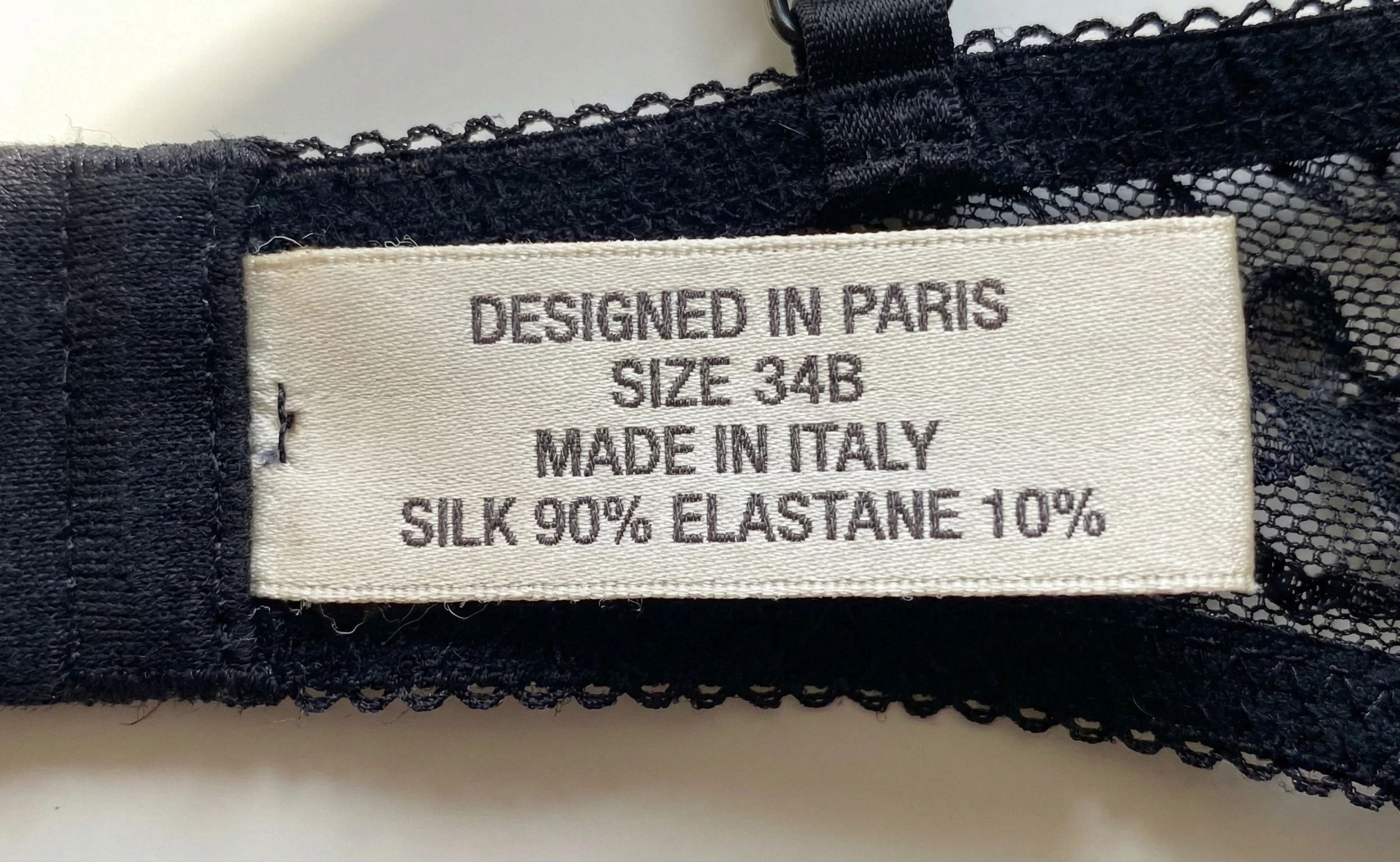
“Designed in” is the most frequently misunderstood. In lingerie, real design isn’t moodboards. It’s proportion, pattern, grading, fitting. It’s the difference between a strap that cuts and one that settles. It’s anatomy translated into geometry.
“Fabric from” is often the real headline. Lace, tulle, satin, mesh—each has its own ecosystem of machines, finishing, and expertise. And “from” can mean weaving, dyeing, washing, stabilising, or any combination. A lace may be developed in one country, produced in another, finished in a third. The phrase can be precise—or it can be a halo.
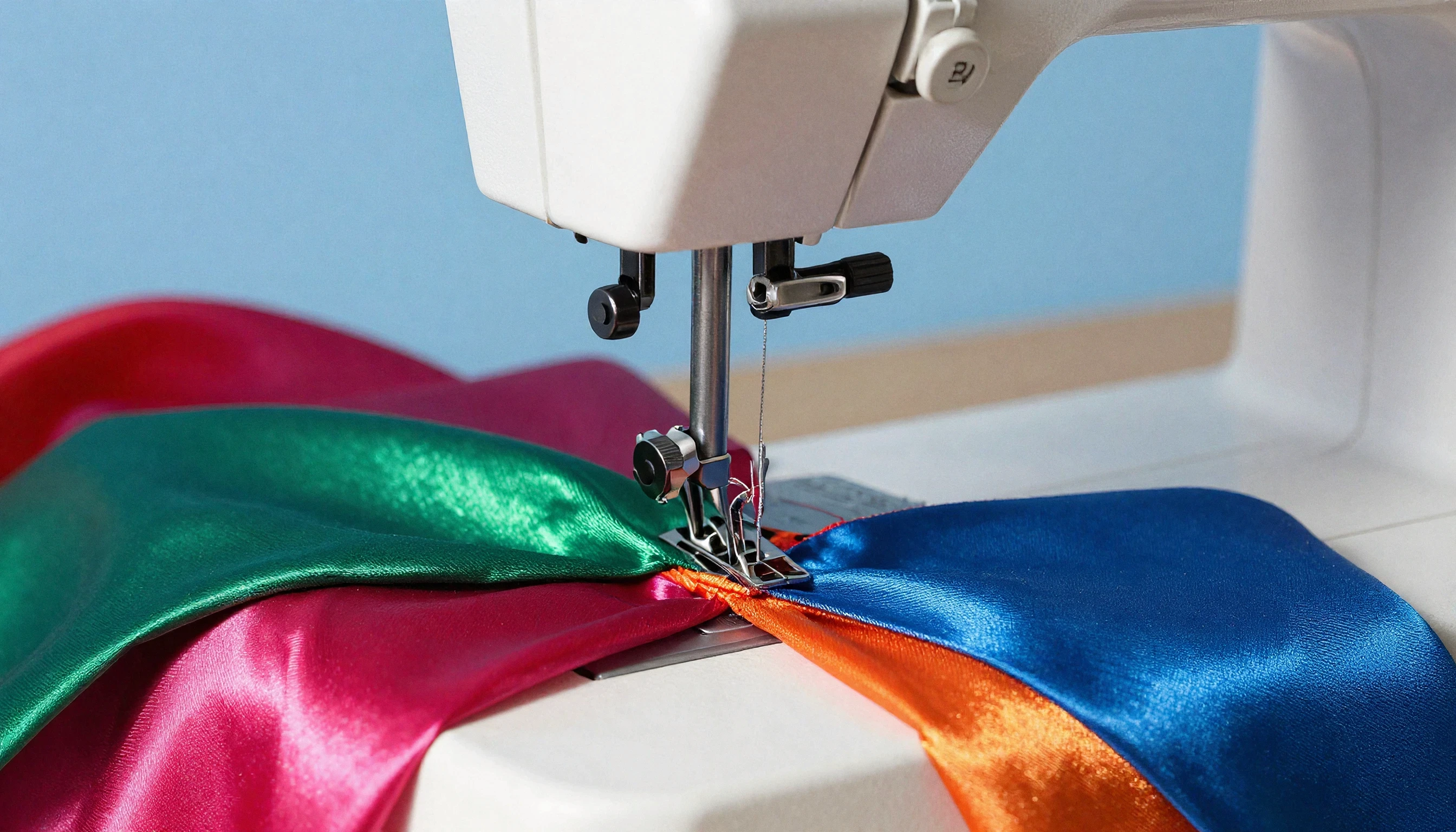
“Assembled in” is where the garment becomes intimate with labour. Lingerie assembly isn’t generic stitching. It’s tension control, stretch behaviour, edge discipline, reinforcement, correction. It includes what brands quietly call finishing: trimming, pressing, stabilising delicate points, checking symmetry, deciding what counts as acceptable variation in something meant to disappear under clothes—and feel effortless on skin.
In reality, these phrases rarely align with the cultural myths attached to certain countries. A piece may be designed in a city with fashion authority, use lace from a storied textile region, and be assembled in a neighbouring country with a specialised workforce. Another piece may travel further: sampling in one place, bulk sewing in another, final inspection back at the brand’s base.
Distance is not automatically compromise. Often, it’s simply specialisation.
“Designed in” is the most frequently misunderstood. In lingerie, real design isn’t moodboards. It’s proportion, pattern, grading, fitting. It’s the difference between a strap that cuts and one that settles. It’s anatomy translated into geometry.
“Fabric from” is often the real headline. Lace, tulle, satin, mesh—each has its own ecosystem of machines, finishing, and expertise. And “from” can mean weaving, dyeing, washing, stabilising, or any combination. A lace may be developed in one country, produced in another, finished in a third. The phrase can be precise—or it can be a halo.
“Assembled in” is where the garment becomes intimate with labour. Lingerie assembly isn’t generic stitching. It’s tension control, stretch behaviour, edge discipline, reinforcement, correction. It includes what brands quietly call finishing: trimming, pressing, stabilising delicate points, checking symmetry, deciding what counts as acceptable variation in something meant to disappear under clothes—and feel effortless on skin.
In reality, these phrases rarely align with the cultural myths attached to certain countries. A piece may be designed in a city with fashion authority, use lace from a storied textile region, and be assembled in a neighbouring country with a specialised workforce. Another piece may travel further: sampling in one place, bulk sewing in another, final inspection back at the brand’s base.
Distance is not automatically compromise. Often, it’s simply specialisation.
Where the Romance Breaks: Legal Origin vs. Lived Origin
Where the Romance Breaks: Legal Origin vs. Lived Origin
The tension appears when a label is read as a complete ecosystem. “Made in Italy” or “Made in France” is often imagined as local materials, local labour, local finishing, local values. The same words may legally describe a garment whose most costly material was produced elsewhere, whose components travelled, and whose final qualifying step happened inside the celebrated border.
It may still be legally correct. The reader’s imagination is just doing extra work.
There’s also an ethical nuance inside origin romance. When prestige replaces understanding, labour becomes invisible twice: first in the outsourcing, then in the story told about it. “Assembled in” can sound like a lesser truth, as if assembly were mechanical—when it’s the moment the garment becomes wearable. “Fabric from” can become a poetic flourish, as if material were an ingredient—when it is often the main text.
The tension appears when a label is read as a complete ecosystem. “Made in Italy” or “Made in France” is often imagined as local materials, local labour, local finishing, local values. The same words may legally describe a garment whose most costly material was produced elsewhere, whose components travelled, and whose final qualifying step happened inside the celebrated border.
It may still be legally correct. The reader’s imagination is just doing extra work.
There’s also an ethical nuance inside origin romance. When prestige replaces understanding, labour becomes invisible twice: first in the outsourcing, then in the story told about it. “Assembled in” can sound like a lesser truth, as if assembly were mechanical—when it’s the moment the garment becomes wearable. “Fabric from” can become a poetic flourish, as if material were an ingredient—when it is often the main text.
Luxury, at its best, doesn’t rely on romance. It relies on clarity.
Clarity doesn’t require a supply-chain confession. It’s a sensibility: refusing to let a label perform more certainty than the garment can support.
Because the label is public speech. The garment speaks in private grammar. A country name may open the sentence, but meaning is written elsewhere: in how a strap is anchored, whether seam allowances are disciplined, whether elastic is guided with respect, whether the fabric is allowed to remain itself.
Lingerie is one of the few fashion categories where the body can verify workmanship immediately—without an audience. You feel the truth in minutes.
Luxury, at its best, doesn’t rely on romance. It relies on clarity.
Clarity doesn’t require a supply-chain confession. It’s a sensibility: refusing to let a label perform more certainty than the garment can support.
Because the label is public speech. The garment speaks in private grammar. A country name may open the sentence, but meaning is written elsewhere: in how a strap is anchored, whether seam allowances are disciplined, whether elastic is guided with respect, whether the fabric is allowed to remain itself.
Lingerie is one of the few fashion categories where the body can verify workmanship immediately—without an audience. You feel the truth in minutes.

So: “Made in” is not nothing. It can reflect real skill, real infrastructure, real continuity. It can also be a legal marker loaded with cultural longing.
Between those realities sits the modern luxury garment: designed in one place, materially born in another, assembled and finished wherever competence still exists. Luxury now proves itself less in labels—and more, quietly, in construction.
So: “Made in” is not nothing. It can reflect real skill, real infrastructure, real continuity. It can also be a legal marker loaded with cultural longing.
Between those realities sits the modern luxury garment: designed in one place, materially born in another, assembled and finished wherever competence still exists. Luxury now proves itself less in labels—and more, quietly, in construction.